The Norwich Medico-Chirurgical Society is one of the oldest medical societies still in existence in the UK. it has origins from the Norwich Philosophical Society (1812), Norfolk and Norwich United Medical Book Society (1824) and the Norwich Pathological Society (1848).
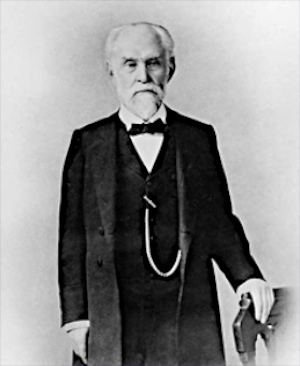
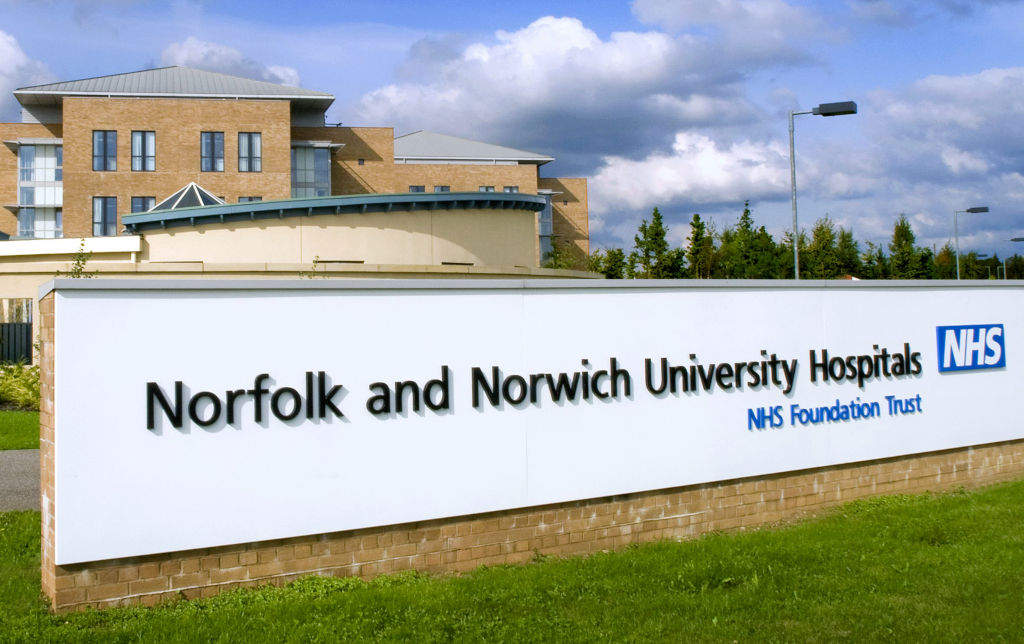
Its earliest history though began in 1812 with the formation of the Norwich Philosophical Society whose members included poets, painters and philosophers as well as scientists, chemists and doctors. This ran for about 15 years and was followed by the Norwich and Norfolk United Medical Book Society. It’s role was to keep the extensive hospital library from which books could be borrowed under strict regulations. Repeated failure to return a book meant you would be ousted from the society and your reputation tarnished. Sadly much of the library was sold off in the 20th century but a few books remain and are held in the Thomas Browne library at NNUH. Including a signed copy of ‘A treatise on the formation, constituents, and extraction of the urinary calculus’ by John Green Crosse.
He went on to form The Norwich Pathological Society in 1848 which provided a format for discussing clinical and pathological cases. The minute books are still kept in the Norfolk Records Office and reveal incredibly detailed discussions of cases, postmortems and specimens. A selection of cases are available in the members area – historical archive material.
The Society Today
The society as it is known today began following a series of meetings, the last of these being in the medical library of St Andrew’s hospital, where members of the United Book and Pathological Societies agreed to amalgamate. The first joint meeting was held on 2nd July 1867 in the museum of the Norfolk and Norwich Hospital. Dr (later Sir) Peter Eade was elected as its first president.
Eade in his address stated, “This is an age of medical change. He who would not be thrown out must keep well in the race; the pace is so rapid that leeway can scarcely be recovered. In spite of being engaged in the active busy pursuits of daily practice, time must be found to learn the ever new facts of medical science”. Something that is as true today as it was in the mid nineteenth century.
A code of law was drawn up, as was a constitution. Minor changes have been made to the constitution whilst its laws have been revised on many occasions.
The President is elected annually and has alternated between a consultant and General Practitioner.
Changes in the modern era
Some things have changed. Meetings are no longer held on the full moon so that members can get home by moonlight. During the COVID pandemic we ran a virtual programme and continued this for a while. However, uptake recently for this has dwindled and we prefer to see each other now Face to Face.
The emphasis is still educational but the slant has changed. National and International speakers provide their view of current medical issues. There are non-medical speakers particularly those from the local community. Social events provide a balance to the annual programme.
We have revived the Jenny Lind Lecture programme and even hosted the Jenny Lind Medal award in 2024. Importantly we continue our links with the UEA medical school and support our medical students as we look forward to the future of the Society.
Norwich Medico-Chirurgical Society
We realise the name of the society is quite a mouthful!
It means Medicine and Surgery. The latin prefix ‘Chir’ means hand and Chirurgia means ‘hand work‘.
Pronounciation is Medico – Sh-urge-ical Society.
However, we usually shorten it to Med Chi
Pronounced: Med C-eye.
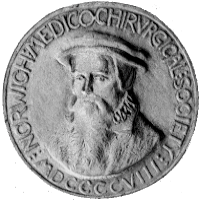
The Emblem of Med Chi is of John Caius (1510-1573) who was born in Norwich. He was President of the Royal College of Physicians and established Caius College in Cambridge.